

Getting a good night’s rest is hard enough already without odd noises keeping you up. You may wonder if sounds such as humming, buzzing, or rumbling are normal, especially when they persist over time. Although your HVAC system is liable to make some noise while operating, it should never be loud enough to disturb the peace and comfort of your home. If your HVAC equipment makes consistent noises, don’t worry. You can reduce or even stop most sounds with a little effort, especially if you know what to check.
The following guide will give you insight into reducing the noise levels of HVAC equipment in your home.
The Primary Sources of HVAC Noise
When your HVAC system makes noise, it’s easy to feel unsure about what’s normal and what’s a red flag. Some sounds are completely normal. We expect a low hum when the system runs. A soft “whoosh” as air moves through the vents is also fine. You may hear a gentle click when the unit cycles on or off. Even metal ductwork can make a quick “ping” as it expands and contracts with temperature changes. None of these should worry you.
But there are noises you don’t want to ignore. A loud banging or clanging often means a blower wheel or motor part is loose. Grinding or screeching usually points to worn bearings or belts. If you hear rattling, it could be loose ductwork or panels. Whistling often signals an air leak around the filter or ducts. Hissing or bubbling suggests a refrigerant leak. And if you ever hear a loud “boom” when the furnace starts, that’s a sign to call us right away.
The key is simple: if a sound is new, loud, or keeps getting worse, it’s time to reach out. We’ll track it down, fix it, and keep your system running so you can enjoy peace, comfort, and quiet.
HVAC System Is Telling You It’s Time To Upgrade
Sometimes your HVAC system tries to tell you it’s ready for retirement, and it usually does that through noise. If you’ve noticed constant banging, grinding, or screeching, it’s more than an annoyance. It’s your system crying out for help. Rattles can mean worn parts, while booming at startup often points to serious furnace issues.
When these sounds keep coming back even after repairs, it’s usually smarter to upgrade. A new system runs with minimal noise, saves you money on energy, and provides you with peace of mind. We’ll help you figure out the right time to make the switch.
Modern Noise-Reducing HVAC Innovations To Consider
If noise is driving you crazy, newer HVAC systems offer smart solutions. Variable-speed motors keep airflow smooth and quiet. Sound-dampening insulation reduces vibration and hum. Even newer compressor designs make a big difference, cutting down on that old grinding noise. We can walk you through options like these, so you can enjoy comfort without the racket.
A Thoughtful Layout Goes a Long Way
Where your HVAC equipment sits makes a big difference in how loud it sounds. Outdoor units vibrate, and if they’re right against your house, you’ll hear that rumble inside. We often set them on a level isolation pad and away from doors or windows to cut the noise. Indoors, whistling vents can be just as annoying. That usually happens when airflow gets blocked, so keeping ducts and registers clear helps a lot.
If space is tight, there are still fixes. We can mount your unit on wall brackets with isolation pads, or use spring hangers to separate the equipment from walls and beams. Those little adjustments keep vibration from traveling through your home. With the right setup, you’ll enjoy comfort without the constant buzz, hum, or whistle every time your system kicks on.
Listen and Change Air Filters To Reduce HVAC Noise
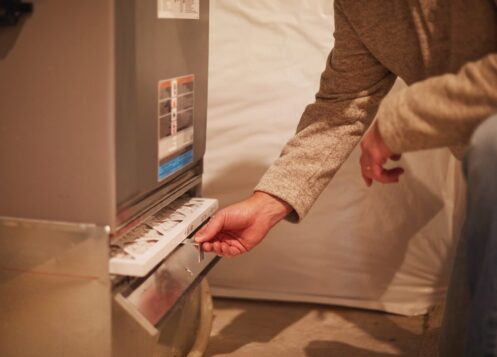
When you start hearing a new noise from your HVAC system, it’s usually your unit asking for attention. A whining fan can mean worn bearings, while rattling panels often point to something loose inside. Filters that someone hasn’t changed in a while may whistle, and dirty coils force the system to work harder, which makes it louder. That’s when it’s time for us to check things out.
Still, there’s a lot you can do between service visits. A quick look at your system every few months goes a long way. Check the filter, listen for new sounds, and make sure nothing is blocking your vents. These small steps help prevent bigger issues and keep your system from struggling. When we come out for scheduled AC and heating maintenance, we will handle the detailed checks and deeper cleaning.
Quiet Your Ductwork
Noisy ductwork can drive you crazy, but there are ways to quiet it down. We often install duct silencers, sometimes called attenuators, to cut down on sound in problem areas. Another smart step is lining key sections with acoustic wraps or heat-resistant liners, which absorb that fan noise. Sealing leaks helps too, since air hissing through gaps can be distracting. At the air handler, we can add flexible connectors to muffle vibration. These fixes take specialty tools and know-how, so it’s not something you should tackle alone.
Variable-Speed and Static Pressure
When air rushes too fast or runs into resistance, you’ll hear more noise than usual. Sometimes, it’s a matter of adjusting your blower speed so the airflow isn’t over the top. Other times, the problem’s in the static pressure. You can lower that by opening closed dampers, upsizing your returns, or swapping out a restrictive filter.
We do this by checking the total static pressure with a manometer before making changes. It helps us know exactly what’s going on inside your system. That way, we can give you the right fix and keep your home quieter and more comfortable.
Heat pumps are especially good at taking advantage of variable-speed motors. Heat pumps with variable-speed technology adjust airflow in a gradual manner. Unlike older systems that turn on and off, this means better efficiency. That means the system runs longer at lower speeds, keeping your home at a steady, comfortable temperature without all the extra noise. You’ll notice fewer hot and cold spots, better humidity control, and quieter operation.
Ductless Mini-Splits Are Very Quiet
You might want to think about adding a ductless mini-split system to your home. These units are quieter than traditional central air. The compressor is outside, and the indoor heads use smooth, variable-speed fans. That means you’ll enjoy comfort without the constant hum.
Installing one isn’t a DIY project, though it takes the right tools and setup. We can make sure it’s installed right the first time so you don’t run into issues later. If you’d like, we can also go over other noise-reduction options before you decide. Our goal is to help you find what works best for your home.
We’ve served Northern California’s HVAC needs since 2010. We cover Antioch, Concord, Oakland, and more. We repair, install, and maintain HVAC systems and offer heating, cooling, and plumbing services, too.
For noise reduction and HVAC services in Roseville and Northern California, reach out to Environmental Heating & Air Solutions today.
The post Quiet Your HVAC System: Practical Noise Reduction Tips appeared first on Environmental Heating & Air Solutions.