
If your PG&E bill keeps climbing and you can't point to anything you're doing differently, you're not imagining it. Rate structures have shifted several times over the past two years, and between baseline allowances, tiered pricing, and time-of-use windows, homeowners find the bill hard to read, let alone predict.
Part of that number is out of your hands. But a large share comes down to how hard your heating and cooling system works, and that part you control. Environmental Heating & Air Solutions has worked on Northern California HVAC systems since 2010, and we start by looking at the whole system first.
Call (916) 237-8975 or contact us online to schedule a home energy assessment.
Why Does My PG&E Bill Keep Changing?
PG&E prices electricity in tiers. Every household gets a baseline allowance of lower-cost kilowatt-hours based on climate zone and season, and usage above that moves into a higher-priced tier. Add time-of-use pricing and a 2026 rate redesign that shifted part of the cost into a fixed monthly charge, and two similar months of usage can produce very different bills. None of that is something you can change from your side of the meter.
How Much of Your Bill Comes from Heating and Cooling?
Heating and cooling typically make up a large share of a home's total energy costs, often 30 to 45%, and more in a climate with hot summers and cold winter mornings like ours. That's the portion of the bill your HVAC system controls. If the system is aging or poorly sealed, that share climbs even when your habits stay the same.
Ways to Bring the Number Down
Once the system is part of the problem, fixes fall into one of four categories.
Four fixes usually apply:
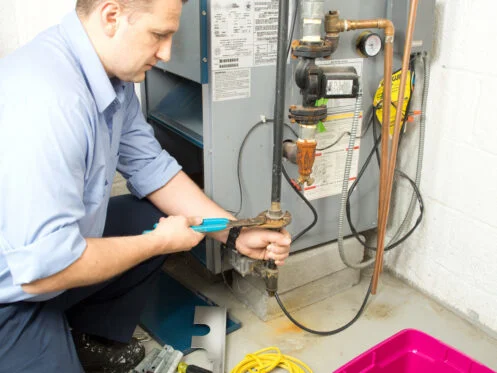
- Keep the system running the way it was built to run – Dirty coils, low refrigerant, and aging parts pull a system below its rated efficiency. Our NATE- and BPI-certified technicians work at or above manufacturer specifications on every visit.
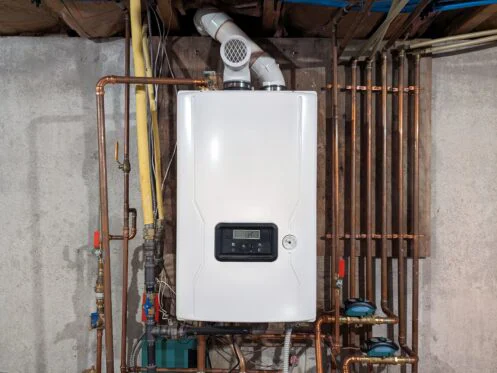
- Replace equipment that's behind today's standard – Equipment installed before 2023 likely runs below the current 14.3 SEER2 minimum. Heat pumps move existing heat instead of generating new heat, and as a Lennox Premier Dealer™, a designation fewer than 3% of contractors nationwide carry, our team installs equipment built to meet it.
- Stop losing conditioned air before it reaches you – Unsealed ducts and gaps in attic, floor, or crawl space insulation let conditioned air escape before it does its job. Our energy efficiency services include insulation assessments and duct sealing.
- Add smarter airflow and control – Whole house fans, attic fans, smart thermostats, and zoning cut down on how often the main system has to run. Our team can add any of these through home automation.
Not every fix applies to every home, which is why the right starting point is finding out which one.
Signs Your System Is Working Harder Than It Should
A few patterns show up repeatedly in homes with climbing bills.
Watch for these signs:
- Short-cycling – The system turns on and off in quick bursts, and our NATE-certified technicians can trace the cause during a diagnostic visit.
- Uneven temperatures room to room – One warm room and one cold room often points to duct problems or a system sized wrong for the space.
- A bill that outpaces your usage history – Compare this month's PG&E usage to the same month last year in your online account. Similar kilowatt-hours with a higher bill point to a system losing efficiency.
- A system past 12 to 15 years old – Older equipment runs below current efficiency standards, and our technicians can tell you whether repair or replacement makes sense.
Any one is worth a look.
Rebates and Financing Can Help Offset the Cost
Depending on income and the upgrade, homeowners may qualify for utility discount programs or state incentive programs that offset part of the cost of a heat pump, insulation, or other efficiency upgrade. Availability changes throughout the year, so it's worth checking eligibility. Financing through our partners can spread the remaining cost over monthly payments.
A PG&E bill that keeps climbing has more than one cause: part rate, part your own system. You can't do anything about PG&E's pricing. You can find out what your system costs you, and that's the assessment Environmental Heating & Air Solutions runs before recommending anything. Read more about our credentials on our About Us page before you call.
Schedule an HVAC diagnostic visit. Call (916) 237-8975 or contact us online to get started.